Last updated: October 27, 2026
Quick answer: most beginners can insert a menstrual cup in 5 to 10 minutes once they use a fold, relax their pelvic floor, aim toward the tailbone, and let the cup open low in the vagina before checking the seal. Menstrual cup insertion for the first time gets easier when you stop trying to “push it up” and instead let the cup sit where your body gives it space.
Key takeaways
- A small amount of water-based lubricant can make the first insertion easier, especially on a heavier day or if the cup feels dry.
- The cup usually goes lower than a tampon, with the stem staying reachable and the rim sitting below the cervix.
- A fold matters more than brute force; a narrower shape at entry usually causes less resistance.
- If you feel pinching, sharp pain, or a persistent leak, stop and reposition rather than forcing the cup higher.
- The goal is not perfection on the first try; the goal is a comfortable fit that opens and seals.
For a broader starting point, the guide to menstrual cup basics and first-time setup can help with the prep work before you try the steps below.
What you need before you try menstrual cup insertion
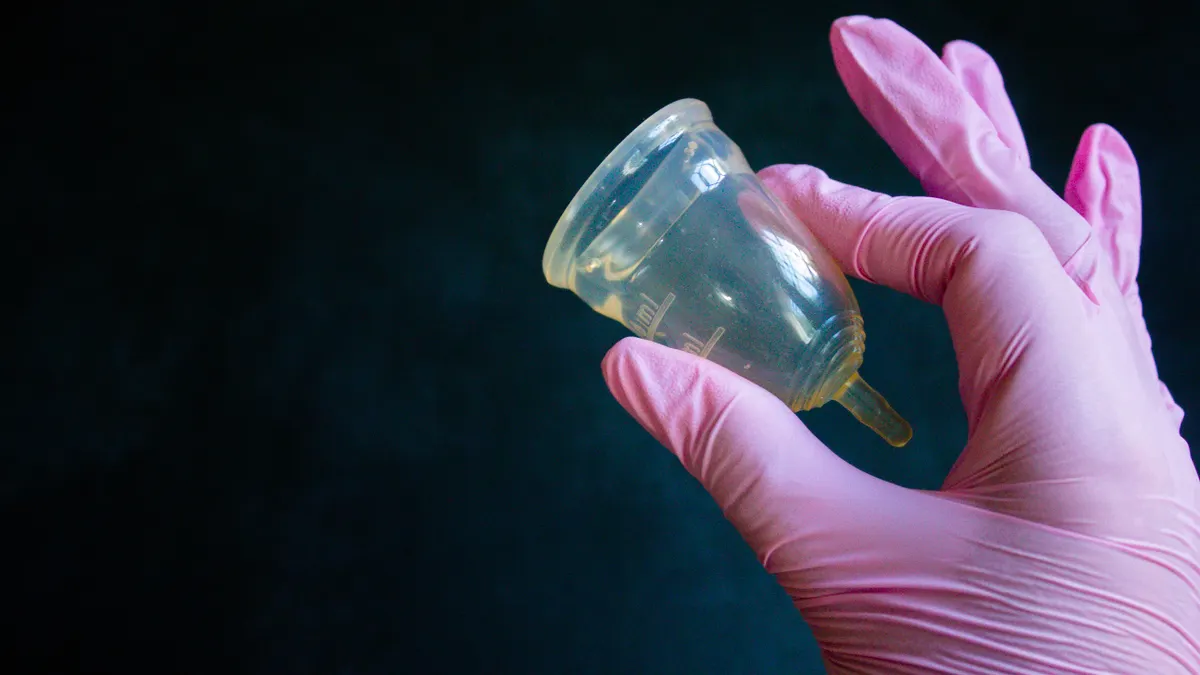
You need a menstrual cup, clean hands, and either a little water or a water-based lubricant before you start. A bathroom with a sink and enough time for an unhurried 5 to 10 minutes makes the first attempt far easier than rushing between tasks.
The cup itself matters less here than the setup. A cup with a firmer stem can be easier to find later, but the insertion process is the same for most standard cups. The important parts are the fold, the angle, and your pelvic floor. If you are tense, the vaginal muscles tighten and the cup meets more resistance at the entrance.
Position also changes the experience. Many first-timers do better sitting on the toilet, standing with one foot on the tub edge, or squatting slightly. Those positions shorten the distance you need to reach and often make the cervix easier to aim around. If you are on a very light day, the cup may feel drier, so a drop or two of water-based lubricant can reduce friction without making the cup slippery in your hand.
Do not start by trying to “place” the cup like a plug. A menstrual cup works by opening inside the vagina, not by being jammed all the way up. That idea saves a lot of frustration on the first day.
If you have severe vaginal pain, a history of painful penetration, or a condition that makes insertion difficult, this is a good time to ask a clinician for guidance before you keep trying.
How do you insert a menstrual cup?
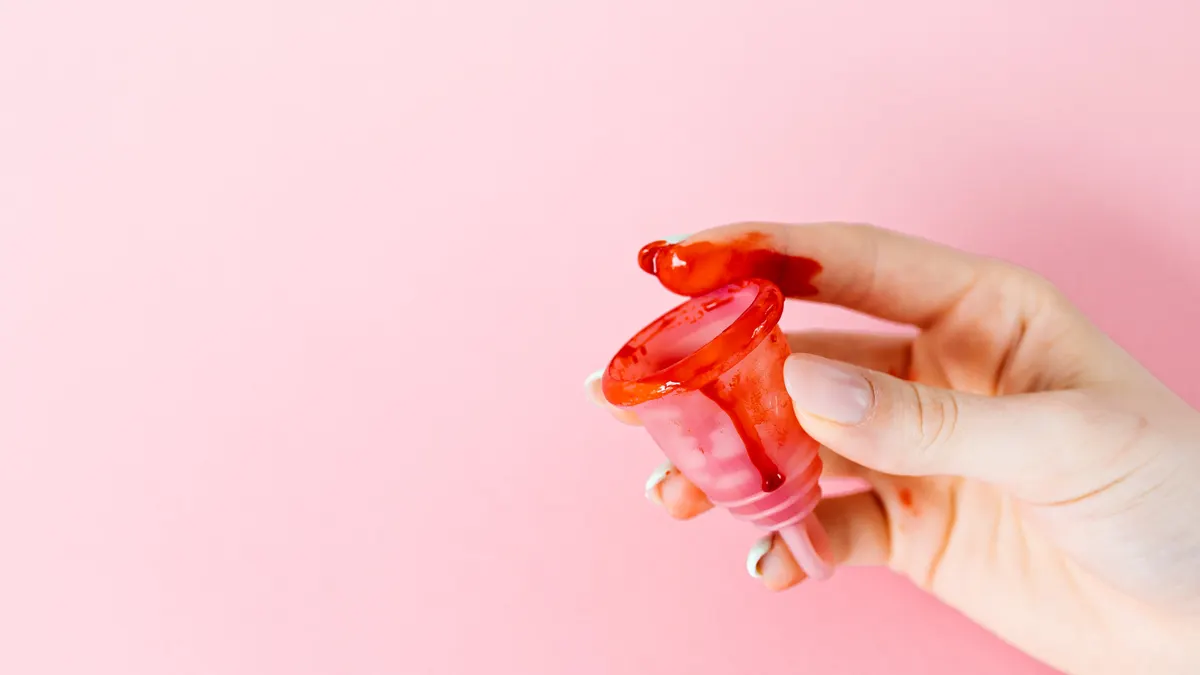
You insert a menstrual cup by folding it, guiding the folded rim in at an angle toward your tailbone, and letting it open below the cervix. The process is simple in theory and usually awkward the first few times, which is normal.
-
Wash your hands and wet the cup. Rinse the cup with water or add a tiny amount of water-based lubricant to the rim. The result should be a smoother entry, not a slippery mess that is hard to hold.
-
Choose one fold before you start. A C-fold, punch-down fold, or seven fold narrows the cup so it can pass the vaginal opening more easily. The punch-down fold is often the easiest starting point because it creates a smaller point at the tip.
-
Relax your pelvic floor and take a slow breath out. Let your belly soften and avoid clenching your thighs. You want the opening of the vagina to feel less guarded, not braced.
-
Separate the labia with one hand and guide the folded cup in with the other. Aim the cup toward the small of your back or tailbone rather than straight upward. The cup should move in with less resistance when the angle matches your body.
-
Insert it until the body of the cup is fully inside and the stem is still reachable. The cup should not be sitting at the very opening, and it should not be forced as high as it will go. A comfortable first position is usually lower than people expect.
-
Let go and allow the cup to open. You may feel a soft pop, a change in pressure, or no sensation at all. The important part is that the rim is open, not folded flat.
-
Check the seal by gently rotating or running a finger around the base. If the cup feels flattened, still folded, or badly off-center, pinch the base slightly or nudge the cup until it opens. A good seal usually feels like the cup has seated itself rather than sitting loosely.
If the cup refuses to open, do not keep forcing it upward. Pull it down a little, re-fold if needed, and try again. Most first-use problems come from trying to push through resistance instead of backing up 1 step.
Which folding technique is easiest for first-time use?
The easiest folding technique for many beginners is the punch-down fold because it creates a narrow tip and a smaller surface at the entry point. A C-fold is also common, but it can spring open sooner in some cups, which can feel awkward if you are new to the process.
A punch-down fold starts by pressing one side of the rim down toward the base, making a pointed insertion end. That point often gives you more control at the opening, especially if the cup is medium firmness. A C-fold, where the rim is folded into a “C” shape, is simpler to learn, but the folded width can be a little wider at entry.
A seven fold is useful if the cup keeps opening too early. That fold creates a sharper point and can help on days when the vaginal opening feels less relaxed. Some cups hold certain folds better than others, so the same fold may behave differently with a stiffer cup versus a softer one. That is one reason the first learning curve can take several cycles instead of one afternoon.
If the fold keeps slipping from your fingers, dry your hands before you try again. If the cup feels too dry to insert smoothly, use a trace of water-based lubricant on the rim only. That small change often helps more than switching positions repeatedly.
The trade-off is that a smaller fold can be easier to insert but harder to open once inside. A larger fold may be easier to open but harder to pass the entrance. That is why trying 2 folds is usually smarter than assuming the first one is “wrong.”
How do you find the right angle and the cervix?
You find the right angle by aiming the folded cup back toward the tailbone, not straight up, and by placing it low enough that it can open around the cervix rather than below it. The cervix sits at the top of the vagina, but the path to it is rarely vertical.
A helpful image is a gentle diagonal, not a straight line. If you direct the cup upward, it often hits resistance and folds back on itself. If you angle it toward the back wall, it can slide into the vaginal canal more naturally. Once inside, let the cup rest low for a moment and then nudge it a little higher only if needed.
Some people have a cervix that sits lower during menstruation and higher at other times. That means cup placement can vary across the cycle. On a low cervix day, the cup may sit closer to the opening and still work fine. On a higher cervix day, you may need to insert it farther before it opens. The stem should remain usable, but it does not have to stick out.
If you are unsure where your cervix is, you can feel for it with a clean finger before inserting the cup. It often feels firmer than the surrounding tissue, more like the tip of a nose than soft vaginal wall. You do not need to do this every time, but it can help the first few times when the cup keeps opening in the wrong place.
Do not chase the cervix with the cup tip. That often leads to discomfort. Aim around it, not at it.
What should the cup feel like when it is in right?
A properly placed menstrual cup should feel present but not painful, with no pinching at the opening and no strong sensation of the stem rubbing. The cup should feel like it has opened fully and is sitting below the cervix, not clamped against the vaginal wall.
A few signs usually mean the placement is good:
- You can sit, stand, and walk without sharp discomfort.
- The cup does not immediately slide out.
- The base feels round rather than flattened or folded.
- The stem is not poking, unless your cup style has a longer stem that needs trimming later.
A seal usually forms when the rim opens and the cup grips the vaginal walls lightly. However, you might feel a small pop, but not always. Some people never notice a dramatic “snap,” and that is fine. What matters is whether the cup leaks after a short test period.
If the cup feels crooked, pinch the base gently to encourage it to open, then rotate it a quarter turn or use a finger to sweep around the rim. If it still feels wrong after 2 or 3 adjustments, remove it and start over rather than tolerating a bad fit. A bad position can leak, pinch, or make the cup feel stuck.
This is the point where beginners often expect too much feedback from the body. A menstrual cup is often quieter than a tampon in use. The absence of pain is usually a better sign than a dramatic sensation.
Common first-time mistakes and how to fix them
The biggest first-time mistake is pushing the cup straight up too fast, which makes the rim catch on the vaginal wall and prevents it from opening. The fix is to slow down, change the angle, and let the cup travel diagonally toward the tailbone.
Another mistake is staying too tense in the pelvic floor. Tight muscles narrow the passage, so the cup feels larger than it is. A slow exhale, dropping the shoulders, and relaxing the thighs can change the insertion more than switching folds. If you are sitting on the toilet with your feet flat and you still feel blocked, try raising one foot or standing in a partial squat.
A third mistake is assuming that more lubricant is always better. A thin smear of water-based lubricant can help, but too much can make the cup hard to grip and may make it rotate before opening. Use just enough to reduce friction at the rim.
A fourth mistake is leaving the cup half-open and assuming the stem position tells the whole story. The stem can sit fine while the rim is still folded. If you feel leaking within the first hour, check for a flattened base, a crooked angle, or a cervix sitting beside the cup instead of inside it.
A fifth mistake is trying to force a stiff cup into place on the first try. If the cup is too firm for your body, it may keep springing open early and causing pinching. That does not mean menstrual cups are impossible for you; it means your folding technique and cup firmness may not match well yet.
If insertion is painful every time, stop and get medical advice. Pain that persists is not a “normal learning curve” problem.
How do you troubleshoot leaks, pressure, and a cup that will not open?
You troubleshoot a difficult cup by lowering it, resetting the fold, and checking whether the cervix is beside the cup instead of above it. Most first-time issues come from positioning, not from a defective cup.
If the cup will not open, remove it slightly until you can reach the base, then let it unfold again with a different fold or a tiny twist. Sometimes the rim opens in the wrong direction and stays flattened against the vaginal wall. Pulling it back a little often gives the cup room to spring open.
If you feel pressure, the cup may be sitting too high, touching the cervix, or not aligned with your body. A cup that is too far up can feel more uncomfortable than one sitting lower. Try lowering it a few millimeters rather than pushing it farther in.
If you get leaks soon after insertion, the first thing to check is whether the cup opened completely. The second is whether the cervix is actually inside the cup. A cup can seal well and still leak if the cervix sits outside the rim. Reinsert with a better angle and, if needed, try a different position that gives you a clearer line to the cervix.
If the stem rubs, that usually means the cup is slightly low or the stem is longer than you need. You do not need to solve that on the first day. A tiny repositioning often helps, and stem trimming is a later adjustment, not a first-use requirement.
A cup that feels impossible on day 1 may become manageable after 2 or 3 cycles. The learning curve is real, and it often improves once your body gets used to the motion and your hands get used to the fold.
For external guidance on menstrual cup insertion and fit, the Mayo Clinic overview on menstrual cups and the NHS page on menstrual cups are useful places to cross-check the basics.
How do you insert a menstrual cup?
You insert a menstrual cup by folding it, guiding it in at an angle, and letting it open low in the vagina. The first sentence matters most: the cup should go in folded, not pushed in open.
Start with clean hands and a little water or water-based lubricant if needed. Then relax your pelvic floor, aim toward your tailbone, and let the cup open before you check the seal. If it hurts, feels crooked, or stays folded, back up and try again rather than forcing it.
How far up does a menstrual cup go?
A menstrual cup goes high enough to sit below the cervix, but not so high that you cannot reach the stem or the base. In practice, that often means lower than people expect and farther in than a tampon stem would sit.
The exact depth varies with cervix height, body position, and the cup’s shape. If the cup feels jammed or unreachable, it is probably too high. If it sits at the opening and leaks, it is too low or not open.
How do you know if a menstrual cup is in right?
You know a menstrual cup is in right when it feels comfortable, opens fully, and does not leak right away. A smooth, round base and a quiet fit are better signs than a dramatic sensation.
If the base feels flattened, the stem rubs, or you leak soon after inserting it, the cup likely needs repositioning. A gentle rotation, a lower reset, or a different fold often fixes the problem.
Drafted with AI; not yet reviewed by a person.